
Grilled Vegetable Kabobs Recipe - Bold Fire-Kissed Flavor
Ingredients
Method
- Start by soaking your wooden skewers in a shallow dish of cold water for at least 30 minutes before you fire up the grill. This is non-negotiable if you are not using metal skewers. A dry wooden skewer over direct high heat is a flare-up waiting to happen, and nobody wants charred sticks in their kabobs. If you have metal skewers, skip this step and move straight to prep.
- While the skewers soak, build your marinade. In a large mixing bowl, combine the olive oil, soy sauce, balsamic vinegar, minced garlic, fresh lemon juice, smoked paprika, dried oregano, crushed red pepper flakes, kosher salt, and black pepper. Whisk everything together aggressively until fully emulsified. Taste it - it should hit you with savory, tangy, and smoky notes all at once. This marinade is the foundation of the flavor build, so make sure it is balanced before the vegetables go in.
- Cut all your vegetables into uniform 1 to 1.5-inch pieces. This is the most important prep step for even cooking. If your zucchini rounds are 0.5 inches and your pepper chunks are 2 inches, you will end up with some pieces overcooked and others raw by the time they come off the grill. Consistency in size means consistency on the fire. Add all the cut vegetables except the cherry tomatoes into the marinade bowl and toss thoroughly to coat every surface. Let them marinate at room temperature for at least 20 minutes, or up to 1 hour in the refrigerator for deeper flavor penetration.
- Fire up the grill. For charcoal, use a chimney starter and get your coals fully ashed over before spreading them into a single even layer for direct high heat. You are targeting a grill surface temperature of 450 to 500 degrees Fahrenheit. For gas, preheat all burners on high for 10 to 15 minutes with the lid closed. A properly preheated grill is what gives you those restaurant-quality sear marks and that caramelized char - do not rush this step. Clean your grates with a grill brush and then oil them lightly using a folded paper towel dipped in vegetable oil held with long tongs.
- Thread your marinated vegetables onto the skewers, alternating colors and types for visual appeal and even heat distribution. Do not pack the pieces too tightly together - leave just a small gap between each piece so heat can circulate and every surface gets grill contact. Save the cherry tomatoes for a separate skewer or add them to the ends of existing skewers, as they cook faster than the denser vegetables and can go on the grill for the last 4 to 5 minutes only.
- Place the kabobs directly over the hot coals or lit burners. You should hear an immediate aggressive sizzle when they hit the grate - that sound means you are in the right temperature zone. Cook for 3 to 4 minutes per side, rotating the skewers a quarter turn every 3 to 4 minutes to hit all sides evenly. You are looking for deep grill marks, visible charring on the edges, and vegetables that are starting to look slightly collapsed and caramelized. Total cook time will be 10 to 14 minutes depending on your heat and vegetable density.
- During the cook, use your basting brush to apply any remaining marinade to the kabobs during the first two rotations. Do not apply marinade during the final 3 minutes of cooking - you want that last blast of direct heat to set and caramelize the glaze rather than add more liquid. Watch for flare-ups from dripping marinade and use your long tongs to move kabobs temporarily off direct heat if flames get aggressive. A little char is great. Carbonized vegetables are not.
- Add your cherry tomato skewers to the grill during the final 4 to 5 minutes of the cook. They need just enough time to blister and get a little char without completely collapsing. Watch them closely - tomatoes move from perfect to blown out fast at high heat. You want them just softened with visible grill marks and a light char on the skin.
- Pull the kabobs off the grill when the vegetables are tender with visible caramelization and have beautiful dark grill marks on multiple sides. Transfer them to a platter or wooden cutting board. Unlike proteins where you rest the meat to redistribute juices, vegetables do not require a rest period - but do let them sit for 2 to 3 minutes before serving so they are not mouth-scorching hot. Finish with a shower of freshly chopped parsley, a squeeze of fresh lemon juice, and a light drizzle of good olive oil over the top for a bright, fresh finish that elevates the whole dish.
- Serve the kabobs directly on the skewers for dramatic presentation, or slide the vegetables off the skewers onto a serving platter for easier sharing. Pair with grilled flatbread, tzatziki, chimichurri, or your favorite BBQ dipping sauce. These kabobs hold up beautifully as a standalone vegetarian main or as a powerhouse side next to grilled chicken, smoked sausage, or a reverse-seared steak.
Nutrition
This grilled vegetable kabobs recipe is the kind of cook that turns skeptics into believers – because once you hit fresh vegetables with serious high heat over live fire, something magical happens. We are talking deep caramelization, smoky char marks, and that irresistible fire-kissed sweetness that no oven roast can ever replicate. Whether you are running a full backyard BBQ spread or looking for a killer side to your low and slow brisket, these kabobs earn their place at the grill every single time.
The secret to elite veggie kabobs is all about technique and timing. You want your grill running hot – right around 450 degrees Fahrenheit over direct heat – so you get that aggressive sear and gorgeous char without turning your vegetables to mush. We are talking 10 to 12 minutes total cook time, rotating every 3 to 4 minutes to hit all four sides with even grill contact. The marinade does the heavy lifting before the fire does its thing, and together they create a depth of flavor that will have your guests reaching for seconds before the platter even hits the table.
At GrillMasterHQ, we treat every cook as a craft, and veggie kabobs are no exception. Vegetable selection, cut size, skewer type, marinade time, and grill temp all factor into the final result. Rush any one of those steps and you end up with burnt peppers and raw zucchini on the same skewer – a tragedy no pitmaster should tolerate. Follow this guide step by step and you will pull off kabobs with perfect texture, bold smoky flavor, and enough visual wow-factor to make them the star of any cookout spread.
Grilled Vegetable Kabobs Recipe – Bold Fire-Kissed Flavor
This grilled vegetable kabobs recipe delivers smoky, caramelized veggies with perfect char marks every single time. Marinated in bold herbs and hit with high heat for that fire-kissed finish, these kabobs prove the grill is not just for meat. Fire up the grill and make tonight legendary.
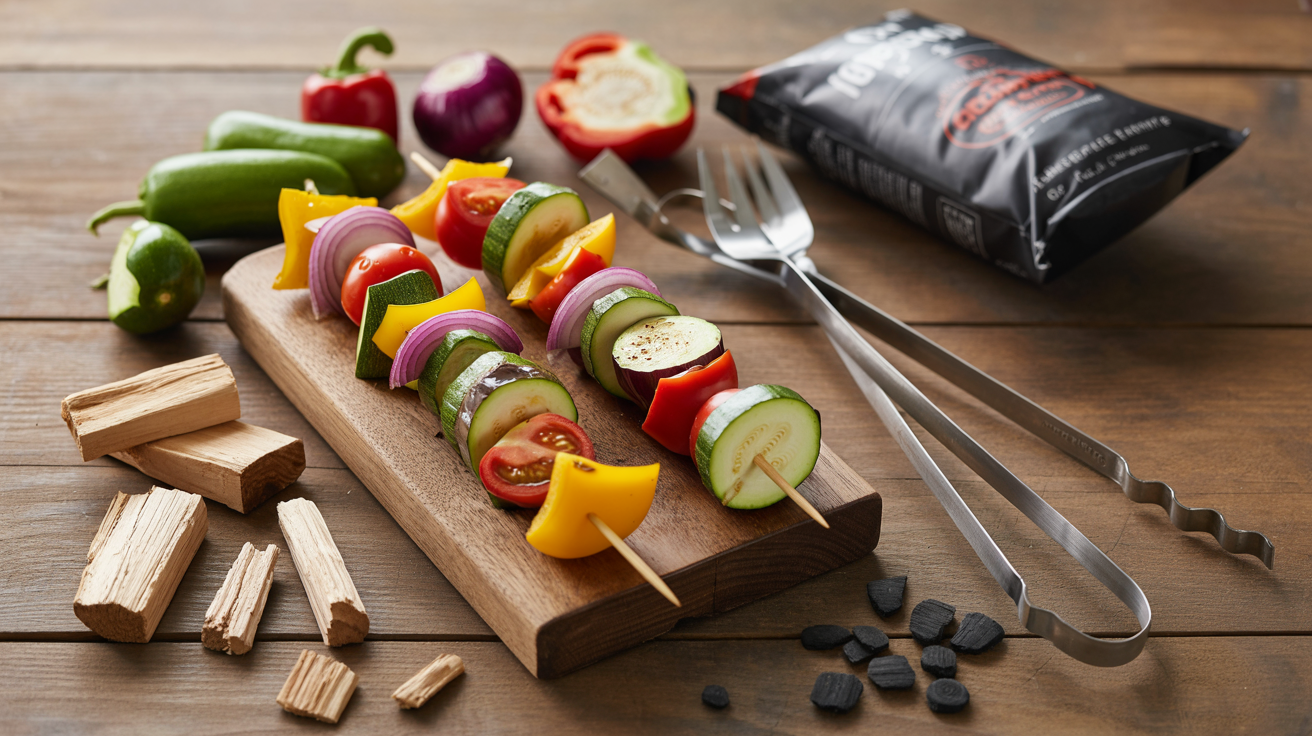
Ingredients
| AMOUNT | INGREDIENT | NOTES |
|---|---|---|
| 1 large | red bell pepper | cut into 1.5-inch chunks |
| 1 large | yellow bell pepper | cut into 1.5-inch chunks |
| 1 large | green bell pepper | cut into 1.5-inch chunks |
| 2 medium | zucchini | sliced into 1-inch thick rounds |
| 1 medium | red onion | cut into 1.5-inch wedge chunks, layers separated |
| 8 oz | cremini mushrooms | whole or halved if very large |
| 1 pint | cherry tomatoes | whole, added toward end of cook |
| 1 medium | yellow squash | sliced into 1-inch thick rounds |
| 0.25 cup | olive oil | extra virgin, for the marinade base |
| 3 tablespoons | soy sauce | adds umami depth and helps with caramelization |
| 2 tablespoons | balsamic vinegar | for sweetness and a sticky glaze effect |
| 4 cloves | garlic | minced fine |
| 1 tablespoon | fresh lemon juice | brightens the marinade |
| 1 teaspoon | smoked paprika | adds a subtle smoke layer before the fire even touches them |
| 1 teaspoon | dried oregano | for herby Mediterranean backbone |
| 0.5 teaspoon | crushed red pepper flakes | adjust to your heat preference |
| 1 teaspoon | kosher salt | do not skimp – vegetables need proper seasoning |
| 0.5 teaspoon | black pepper | freshly cracked for best flavor |
| 2 tablespoons | fresh parsley | chopped fine, for garnish after the cook |
Instructions
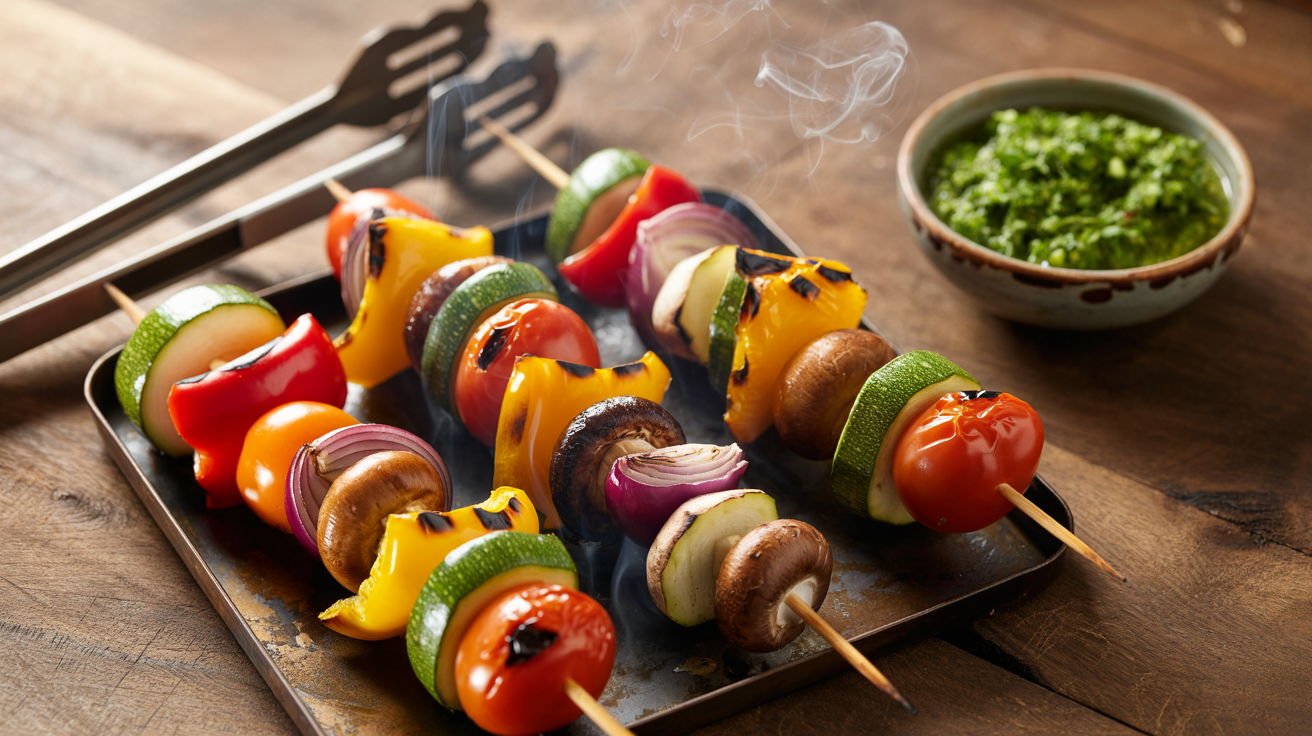
Nutrition (per serving)
The BBQ Story Behind This Recipe
Kabobs have roots stretching back thousands of years across the Middle East, Central Asia, and the Mediterranean, where cooks would thread seasoned meats and vegetables onto swords or sticks and cook them over open flames. The word itself traces to Arabic and Persian culinary traditions, and the technique spread across trade routes and conquests until it became a cornerstone of cooking cultures from Turkey to India to the American backyard. When you load up a skewer and hover it over live fire, you are participating in one of the oldest grilling traditions on earth – and that is something worth honoring with great ingredients and solid technique.
In American BBQ culture, vegetable kabobs carved out their own lane during the outdoor grilling boom of the mid-20th century, when backyard cookouts became a national pastime. Grill masters started threading peppers, onions, mushrooms, and squash alongside the burgers and dogs, discovering that high-heat direct grilling transformed humble produce into something extraordinary. Today, veggie kabobs have evolved far beyond an afterthought side dish. With bold global-inspired marinades, premium hardwood charcoal, and a modern appreciation for plant-forward cooking, grilled vegetable kabobs recipe culture has leveled up into a serious discipline that deserves the same fire and attention as any rack of ribs.
Hot Off the Grill
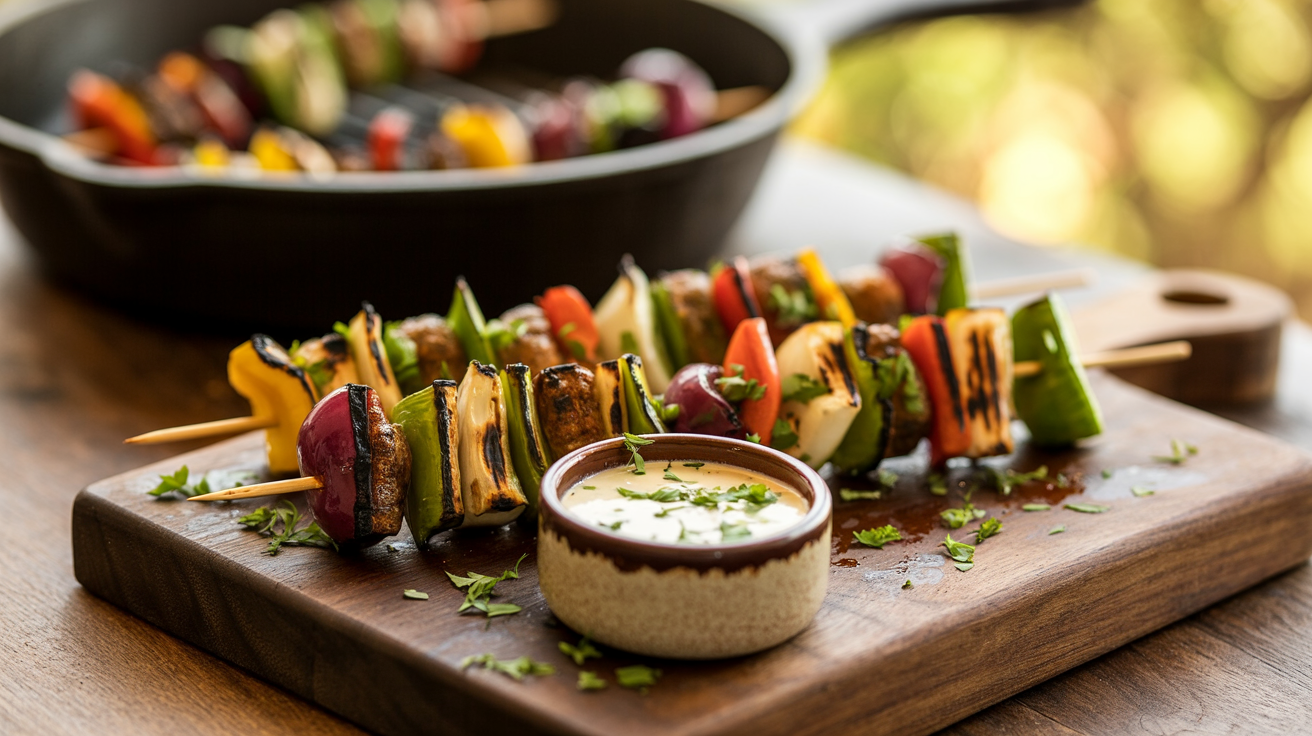
A Closer Look
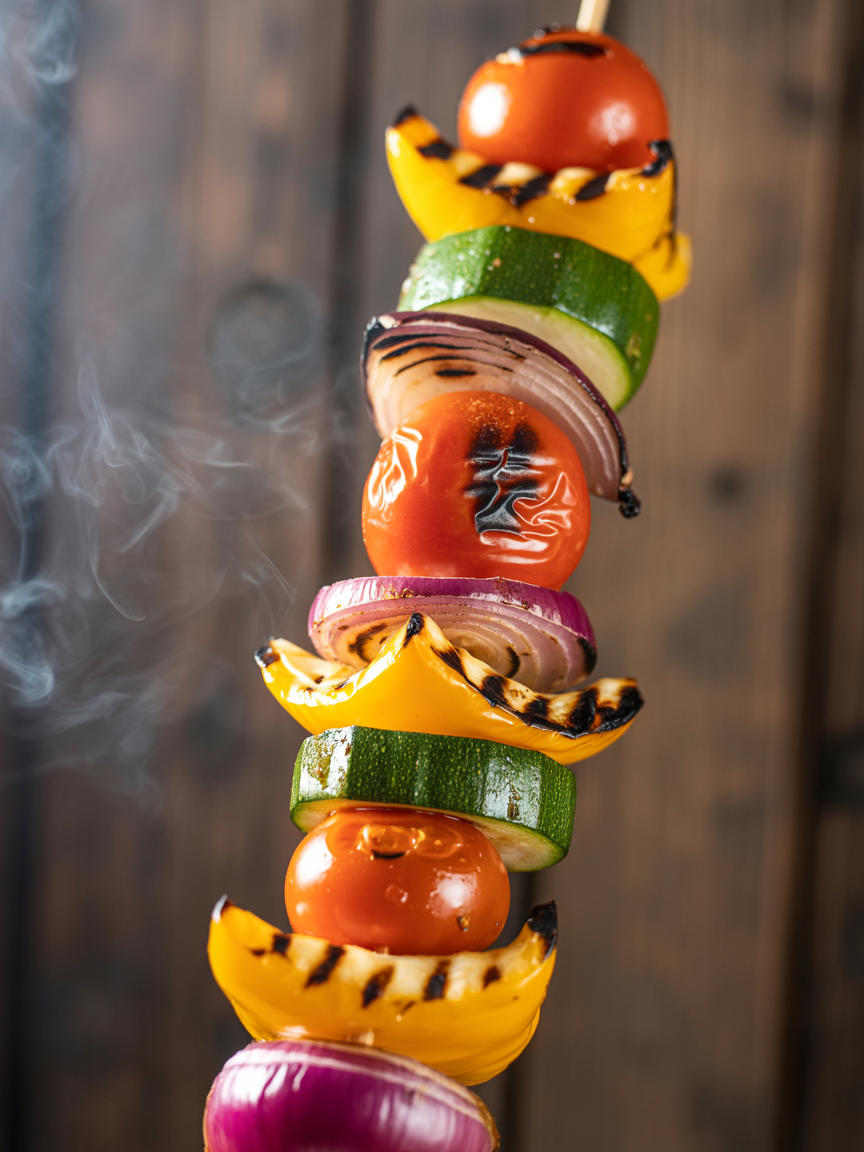
Pitmaster Tips for Best Results
- Uniform cut size is everything. Aim for 1 to 1.5-inch pieces across all vegetables so everything hits done at the same time. Pull out a ruler if you have to – it is worth it.
- Marinate for at least 20 minutes at room temperature or up to 1 hour refrigerated. Beyond 1 hour, the acid in the balsamic and lemon juice starts to break down the cell walls of softer vegetables and you end up with mushy kabobs before they even hit the grill.
- Keep your grill grates clean and well-oiled before loading kabobs. Vegetables have less fat than meat and will stick hard to a dirty grate. A clean, oiled grate means clean release and picture-perfect grill marks.
- Use two parallel skewers per kabob if your vegetables keep spinning when you try to rotate them. Thread each kabob with two skewers set about 0.75 inches apart. This locks every piece in place and gives you total control over every rotation.
- Group vegetables by cook time if you want precision results. Thread separate skewers for dense vegetables like onion and mushroom versus quick-cooking ones like cherry tomatoes and thin zucchini. This way you can pull each skewer at its ideal moment rather than compromising on the timing for a mixed skewer.
🔧 Pitmaster Equipment
Charcoal Grill or Gas Grill: Direct high heat at 450 degrees Fahrenheit is essential for proper caramelization and char marks on your vegetables.
Metal Skewers or Soaked Wooden Skewers: Metal skewers conduct heat for more even cooking and never burn. If using wooden skewers, soak them in water for at least 30 minutes to prevent flare-ups.
Instant Read Thermometer: Useful for monitoring grill surface temp and verifying your grill is in the right zone before you start cooking.
Long Tongs: Keep your hands safe while rotating kabobs over direct high heat and managing any flare-ups from the marinade drips.
Large Mixing Bowl: Essential for tossing your cut vegetables thoroughly in the marinade to ensure every piece gets coated.
Basting Brush: Apply extra marinade or olive oil during the cook to keep vegetables moist and build up beautiful char and flavor layers.
Grill Brush: Start with a clean grate every time. A dirty grate means sticky vegetables, uneven char, and lost flavors.
🔥 Variations
Mediterranean Style Kabobs: Swap the soy sauce in the marinade for extra lemon juice and add 1 teaspoon of cumin and 0.5 teaspoon of coriander. Add cubes of halloumi cheese to the skewers alongside the vegetables – halloumi holds up beautifully to direct high heat and gets incredible grill marks without melting. Serve with tzatziki and warm pita.
Spicy Southwest Kabobs: Build a marinade with olive oil, lime juice, chipotle powder, cumin, garlic, and smoked paprika. Add corn on the cob cut into 1-inch rounds and chunks of poblano pepper to the vegetable lineup. Finish with a drizzle of crema and fresh cilantro. These pair perfectly next to smoked fajita proteins.
Pellet Grill Version: Set your pellet grill to 450 degrees Fahrenheit and follow the exact same steps. Use a fruitwood pellet like cherry or apple for a mild smoke that complements rather than overwhelms the vegetables. You will get a subtle smoke kiss on top of the caramelization that takes these kabobs to another level entirely.
Gas Grill Version: Preheat all burners on high for 15 minutes, then follow the same direct heat technique. Add a smoker box loaded with soaked wood chips – hickory or cherry work great – directly over one of the burners to introduce smoke flavor. The kabobs will not get quite the same depth as charcoal, but the results are still outstanding.
Tofu and Veggie Protein Kabobs: Press extra-firm tofu for at least 30 minutes to remove moisture, then cut into 1.5-inch cubes and marinate alongside your vegetables. Tofu soaks up the marinade aggressively and develops a fantastic crust over direct high heat. This turns the kabobs into a complete protein-forward vegetarian main course that even dedicated meat eaters will respect.
❓ Pitmaster FAQ
How do I keep vegetables from falling off the skewer?
Cut your vegetables into pieces that are at least 1 to 1.5 inches in size. Anything smaller will tear and fall through or spin off during rotation. Using two parallel skewers per kabob also locks everything in place and prevents individual pieces from rotating freely when you try to flip them.
Can I prep these kabobs the night before?
You can cut and marinate the vegetables the night before and store them covered in the refrigerator. Do not thread them onto the skewers more than 2 to 3 hours ahead of cook time, as prolonged time on the skewer can cause softer vegetables to start breaking down at the puncture points. Thread them fresh, cook them hot.
What grill temperature is best for vegetable kabobs?
You want direct high heat at 450 to 500 degrees Fahrenheit. This temperature range gives you aggressive caramelization and char marks while cooking the vegetables through in 10 to 14 minutes without turning them to mush. Too low and you get steamed, soggy vegetables with no color. Too high and the outsides burn before the insides cook through.
Can I use a gas grill instead of charcoal?
Absolutely. Preheat all burners on high for 15 minutes before cooking. The technique is identical to charcoal. For added smoke flavor, place a smoker box loaded with soaked wood chips directly over one of the burners. Cherry or apple wood chips add a mild, sweet smoke that complements grilled vegetables beautifully without being overpowering.
Which vegetables work best for kabobs and which should I avoid?
Dense vegetables like bell peppers, onion, mushrooms, zucchini, yellow squash, and corn hold up best to direct high heat grilling. Cherry tomatoes work great but cook faster so add them late. Avoid very delicate greens or thin asparagus on shared skewers – they will incinerate before your denser vegetables finish cooking. If you want asparagus, grill it separately directly on the grate.
Do I need to oil the vegetables before grilling?
Yes, and the olive oil in the marinade serves this purpose. Make sure every piece of vegetable has a good coating of the marinade before it hits the grill. Oil prevents sticking, promotes even browning, and helps the seasoning adhere and build up into a flavorful crust during the cook. A dry vegetable on a hot grate is a stuck vegetable.